Dongguan Aier Eye Hospital: One City, Three Hospitals and One Clinic, Part of a Global Network
 0769-22660023 0769-22660023

What Should I Do If My Child Is Always Afraid of Having Their Intraocular Pressure Measured?
Is This Measurement Method Harmful to the Eyes?
....
Why Measure Intraocular Pressure?
01
Intraocular pressure is the pressure exerted by the contents of the eyeball on its inner wall. It is one of the key indicators in the diagnosis and treatment of eye diseases and is particularly significant for conditions such as glaucoma.
Dr. Deng Jiangwen, Director of the Glaucoma Department at Dongguan Aier Eye Hospital, notes: In healthy individuals, intraocular pressure remains stable within a certain range to maintain the eye’s normal shape and ensure that the various refractive media maintain proper refractive properties. Statistically, the normal range is defined as 10–21 mmHg; however, in reality, intraocular pressure in the general population does not follow a normal distribution, so a reading above 21 mmHg should not automatically be considered pathological.
From a clinical perspective, normal intraocular pressure refers to the range that does not cause optic nerve damage. This is reflected not only in the absolute value of the pressure but also in characteristics such as bilateral symmetry and relative stability of pressure throughout the day and night.
What is the principle behind non-contact tonometers?
02
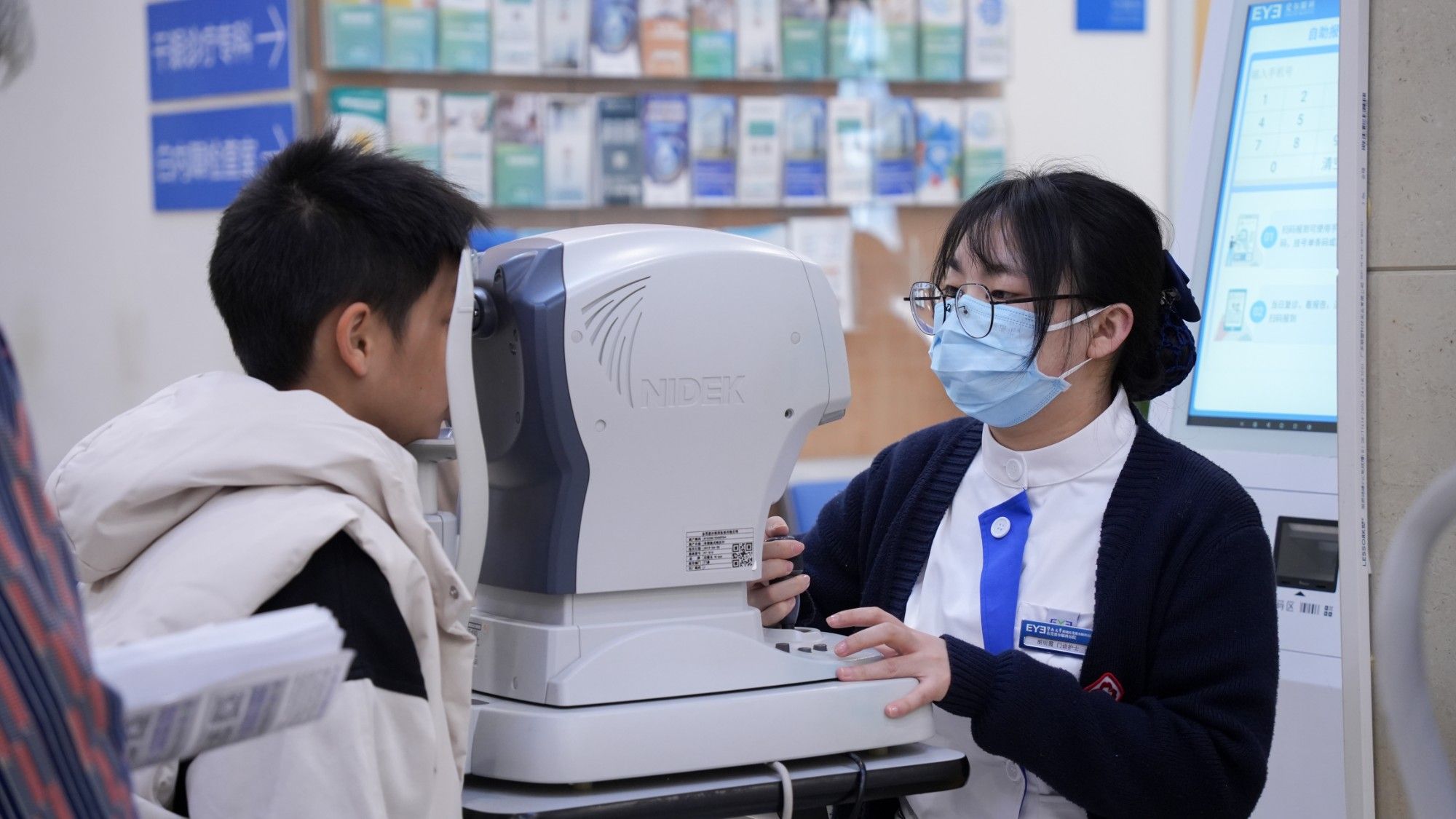
Currently, there are various types of intraocular pressure (IOP) measuring devices commonly used in clinical practice. Non-contact tonometers have become the primary instruments used for IOP measurement due to their advantages: they do not come into contact with the cornea, require no anesthesia, prevent corneal abrasions, minimize the risk of cross-infection, and are simple and time-efficient to operate.
The principle involves using a controlled air pulse to flatten the cornea to a specific area; the monitoring system calculates the time required for this process and automatically converts it into the patient’s intraocular pressure reading.
Simply put, a puff of air is blown onto the eye during the measurement, but this does not damage the eye or cause pain.
What is the procedure for measuring intraocular pressure?
03
The patient sits in a fixed position, rests their chin on the chin rest, keeps both eyes naturally open and looks straight ahead, focuses on the green light inside the instrument, keeps their head still, breathes calmly, and maintains a steady posture.
The examiner selects the fully automatic measurement mode, adjusts the chin rest to the appropriate height for the patient, and moves the control lever until the corneal fluorescence spot falls within the measurable range. Three consecutive measurements are taken, and the average value is calculated.
What precautions should be taken during an intraocular pressure measurement?
01
Do not wear contact lenses. Children wearing eyeglasses should remove them before the examination.
02
During the measurement, the non-contact tonometer will emit a puff of gas and make a sound. At this time, keep your head still and avoid blinking frequently.
03
Do not hold your breath to keep your eyes still, as this can cause an increase in intraocular pressure.
04
Ensure there are no tears in your eyes, as the surface tension of tears can affect the impact of the airflow from the non-contact tonometer, leading to inaccurate results.
05
Prepare yourself mentally; avoid feeling nervous or anxious, as this can stimulate the sympathetic nervous system, increase aqueous humor production, and consequently raise intraocular pressure.

咨询电话:
0769-22660023
医院地址:
东莞市东城区莞樟路石井路段171号-东莞爱尔眼科医院