Dongguan Aier Eye Hospital: One City, Three Hospitals and One Clinic, Part of a Global Network
 0769-22660023 0769-22660023

With the arrival of summer, many people make sure to bring sunscreen, sun-protective clothing, and a parasol whenever they go out. While everyone takes skin protection seriously, few realize that our eyes are actually more vulnerable to UV rays than our skin.
In fact, consistently neglecting eye protection from the sun may allow a common eye condition to creep up on us—cataracts.
UV Rays Can Actually Cause Cataracts
According to World Health Organization statistics, 18 million people worldwide are blind due to cataracts, and about 10% of these cases may be caused by exposure to UV radiation [1]. For every additional hour of sun exposure per day, the risk of developing cataracts increases by 10%, and outdoor workers face a risk three times higher than the general population [2].
A study covering multiple regions in China found that in areas with higher levels of environmental UV radiation, the prevalence of cataracts among people aged 65 and older was also higher—providing strong evidence of the link between UV radiation and cataracts [3].
The damage caused by UV radiation to the eyes is particularly evident in different regions:
In China’s Qinghai-Tibet Plateau, with an average elevation of over 4,000 meters, UV intensity is about twice that of lowland areas. Epidemiological surveys show that the incidence of cataracts on the plateau is approximately 60% higher than in lowland areas, and the age of onset is generally about 10 years earlier [4].
These data all confirm one fact: prolonged exposure of the eyes to UV radiation can indeed lead to cataracts.
How does UV radiation “damage” the eyes?
Cataracts are the leading cause of blindness worldwide. According to statistics from the Ophthalmology Branch of the Chinese Medical Association, the incidence of cataracts among people aged 60 to 89 in China is 80%, while among those over 90, it exceeds 90% [5].
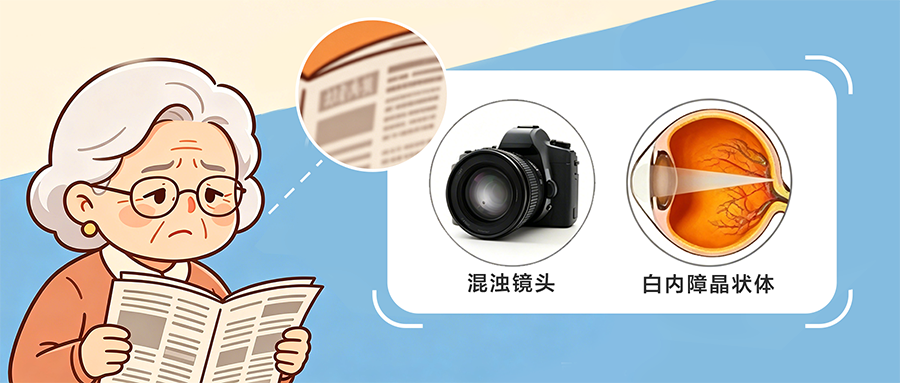
If we compare the eye to a camera, the lens is the “lens” inside it. A healthy “lens” is transparent, allowing light to pass through freely. A cataract occurs when this “lens” gradually becomes cloudy, obstructing incoming light and causing blurred vision.
Many people believe that cataracts are a natural part of aging. While this is true, UV radiation acts as an “accelerator” in this process. UVA and UVB rays in sunlight can penetrate the cornea and reach the lens directly. They act like an invisible hammer, constantly striking the proteins within the lens, causing them to denature and coagulate. Moreover, this process is irreversible—once the proteins have become cloudy, they can never return to their transparent state.
As the condition progresses, cataract patients gradually lose their vision: in the early stages, symptoms include blurred vision, sensitivity to light, and colors appearing duller; in the middle stages, reading, recognizing people, and climbing stairs become difficult; and in the late stages, patients may retain only a sense of light, and in severe cases, it can even lead to blindness.
What should you do if you develop cataracts?
The good news is that cataract treatment techniques are now very well-established. Surgery is currently the scientific method for treating cataracts; neither oral medication nor eye drops can reverse an already clouded lens.
Today, cataract surgery has entered the “blade-free era”—femtosecond laser-assisted cataract surgery. It uses a computer-controlled femtosecond laser to replace the traditional scalpel in performing key steps such as making incisions, capsulorhexis, and nuclear fragmentation, with precision controlled to the micrometer level.
Compared to traditional cataract surgery, femtosecond cataract surgery offers more significant advantages and is particularly suitable for older adults who are afraid of pain or risk:
Of course, whether a patient is suitable for femtosecond cataract surgery must be determined through a detailed preoperative examination and evaluation by a doctor.

咨询电话:
0769-22660023
医院地址:
东莞市东城区莞樟路石井路段171号-东莞爱尔眼科医院