Dongguan Aier Eye Hospital: One City, Three Hospitals and One Clinic, Part of a Global Network
 0769-22660023 0769-22660023

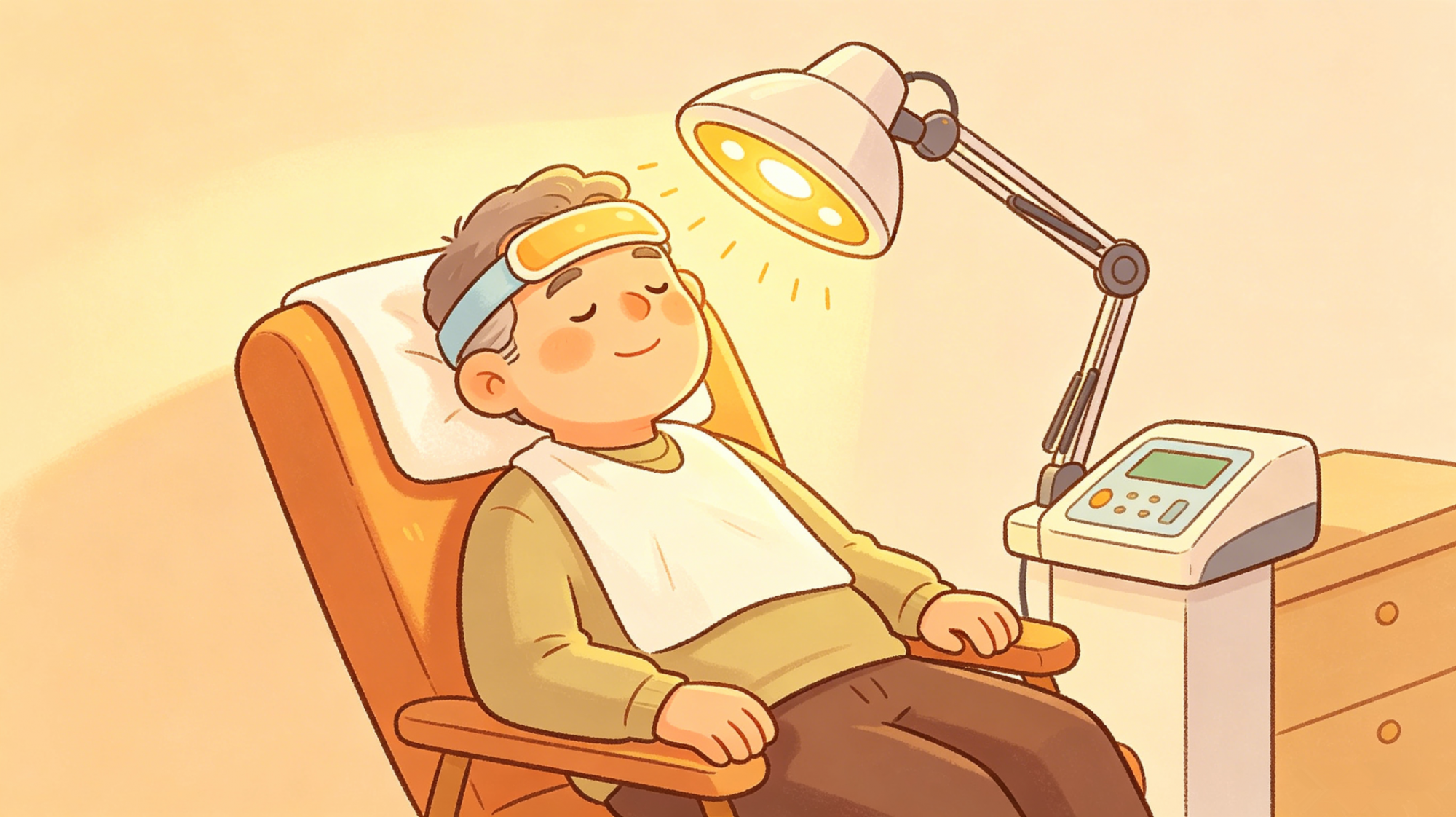
Many middle-aged and elderly people use spectrum therapy devices for physiotherapy to alleviate physical discomfort, but many are unaware that prolonged direct exposure of the head and eyes to the infrared rays emitted by such devices can pose a serious risk to eyesight. Recently, our hospital admitted a patient who nearly lost their sight as a result of prolonged use of a spectrum therapy device.

Mr Rong (a pseudonym), aged 57, has long been plagued by headaches. Three years ago, he began using a spectrum therapy device to irradiate his head daily to relieve his symptoms, sticking to a 30- to 40-minute session every day—a routine he has maintained for three years.
Over the past six months, his vision has deteriorated at a markedly accelerated rate; whether looking at objects near or far, his vision has remained consistently blurred. Recently, Uncle Rong’s vision in his right eye has become increasingly blurred, accompanied by noticeable eye pressure, headaches on the same side and redness of the eye; when the pain is severe, it even triggers palpitations. He therefore sought treatment at Director Liu Fei’s outpatient clinic.
Based on his symptoms and the results of various tests, Mr Rong was diagnosed with acute glaucoma in his right eye and age-related cataract in the same eye. His vision in the right eye was reduced to hand motion only, and his intraocular pressure was as high as 52 mmHg, far exceeding the normal range of 10–21 mmHg.

刘斐院长正为患者检查、讲解眼部病情
According to Dean Liu Fei, the root cause of Uncle Rong’s eye condition was precisely the long-term exposure of his head to a spectrum analyser.
“The infrared rays emitted by the spectrum analyser can penetrate the surface tissues of the eye, where they are absorbed in large quantities by the lens inside the eyeball and converted into heat. Under the influence of long-term chronic thermal damage, the lens proteins undergo denaturation; the originally transparent lens gradually becomes cloudy and swells, leading to the premature progression of cataracts. Furthermore, the swollen and thickened lens blocks the drainage channels for aqueous humour within the eye, causing a sharp rise in intraocular pressure and ultimately triggering the dangerous condition of acute angle-closure glaucoma.”
Why do spectrometers induce eye disorders?
When in operation, spectrometers emit near-infrared and mid-infrared light. These types of infrared rays have strong penetrating power and can pass through the eyelids to reach deep within the eyeball. The lens is highly sensitive to thermal stimulation; prolonged and continuous thermal radiation causes cumulative, irreversible damage, gradually leading to infrared cataracts (thermal cataracts).
“Furthermore, shielding the eyes with ordinary cloth is ineffective and does not provide adequate protection,” warned Director Liu Fei, reminding the public that when using devices such as spectrometers and infrared therapy units, direct exposure of the eyes and head to the instrument’s light must be strictly avoided.
This type of injury is highly insidious; short-term exposure does not cause any noticeable discomfort and is therefore easily overlooked. However, prolonged exposure over many years can lead to the continuous progression of ocular lesions. For those with diabetes or the elderly, whose ocular functions are relatively compromised, the risk of developing such conditions increases significantly.
These Sources of ‘Light’ in Everyday Life Pose Hidden Risks to Eye Health
The eye is a complex and delicate organ. Apart from the infrared light emitted by physiotherapy equipment, there are many other common sources of light in daily life that can cause gradual damage to the eyes; middle-aged and elderly people, in particular, need to be vigilant.

Ultraviolet Radiation: The Hidden Chronic Threat to Eye Health
The damage caused by ultraviolet radiation accumulates over time and can be categorised into acute and chronic damage. Short-term exposure to high-intensity ultraviolet radiation can trigger photokeratitis and snow blindness, causing symptoms such as eye pain, photophobia, tearing and an inability to open the eyes, and directly damaging the cornea.
However, the chronic damage caused by prolonged sun exposure is even more dangerous and difficult to detect; it can induce pterygium, where proliferating tissue gradually obscures the pupil and impairs vision. At the same time, UV rays, with their high penetrating power, can penetrate deep into the eye, accelerating lens opacification and increasing the likelihood of developing cataracts. They can also damage the macula at the back of the eye, leading to macular degeneration—one of the primary causes of permanent vision loss in middle-aged and elderly people.
It is recommended that when going out on sunny days, you wear proper UV-protective sunglasses and a sun hat to minimise direct exposure of your eyes to the sun.
Lasers: Instantaneous intense light can cause permanent damage to eyesight
Laser beams are highly concentrated and extremely bright; toy laser pointers, industrial laser equipment and stage spotlights all fall into this category of light source. If a laser beam strikes the eye directly, it can instantly burn the cornea, the lens and the macula at the back of the eye. The macula is the central part of the retina responsible for sharp vision; once damaged, the resulting vision loss is usually irreversible.
Parents must supervise their children closely and ensure they do not play with laser pointers; those engaged in related work must wear professional protective eyewear.
Intense and Flickering Light Sources: Exacerbate Eye Strain and Trigger Various Eye Conditions
Glaring light sources, such as oncoming car headlights at night or bright construction site lights, can cause temporary glare and blurred vision; frequent exposure to such stimuli can exacerbate eye strain. In addition, flickering light emitted by poor-quality lighting fixtures and ageing electronic screens can continuously disrupt the eye’s accommodative function.
Prolonged exposure to such environments can lead to dry eye syndrome and eye strain, and may also exacerbate myopia; for middle-aged and elderly people, it can worsen symptoms such as eye soreness and double vision.
Director Liu Fei emphasises that eye protection is all about prevention. When using various physiotherapy devices or being in environments with intense light or direct sunlight, it is essential to take appropriate protective measures.
If you experience any abnormal symptoms such as a sudden decline in vision, eye strain, eye pain or blurred vision, do not delay; seek examination and treatment at a reputable ophthalmology clinic as soon as possible. Early detection, early intervention and early treatment are key to safeguarding your visual health.

咨询电话:
0769-22660023
医院地址:
东莞市东城区莞樟路石井路段171号-东莞爱尔眼科医院