Dongguan Aier Eye Hospital: One City, Three Hospitals and One Clinic, Part of a Global Network
 0769-22660023 0769-22660023

Imagine that the back of our eyeball (the retina) is covered by an extremely intricate and delicate network of ‘highways’. This network is called the ‘retinal vasculature’, and consists of arteries and veins. Its day-to-day operations are busy yet highly organised, with two main tasks:
· Arteries deliver supplies: they transport oxygen and nutrients (such as glucose) to the ‘photoreceptor cells’ responsible for vision.
· Veins clear away waste: they promptly remove waste products generated by cellular metabolism (such as carbon dioxide and free radicals).
As long as this network remains unobstructed, our vision remains clear and sharp. However, once diabetes extends its ‘clutches’, a catastrophic traffic gridlock ensues…

High blood sugar is like a corrosive acid rain
For people with diabetes, persistently elevated blood sugar levels are like a corrosive acid rain falling on the ‘motorway’ of the retina. This acid rain first corrodes the motorway’s ‘guardrails’—tiny sentinels known as ‘pericytes’. Their original role is to protect the blood vessels and maintain traffic order, but in a high-sugar environment, they undergo apoptosis and disappear due to ‘poisoning’. Once the guardrails are broken, the motorway begins to warp and bulge.
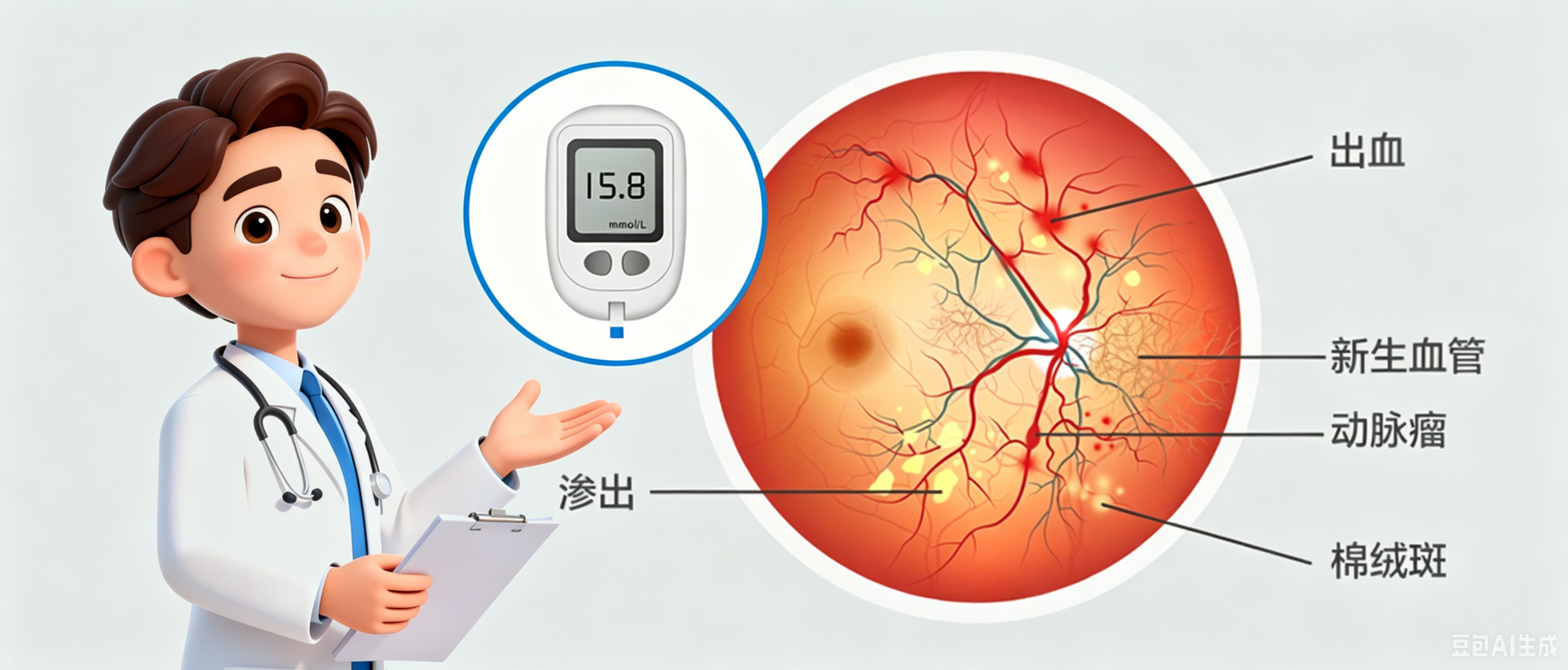
The ‘microaneurysms’ that ophthalmologists observe through an ophthalmoscope are, in fact, the first ‘small blisters’ to form on the motorway—the earliest sign of a traffic jam. As the acid rain continues to corrode the surface, the once-smooth road becomes pitted and uneven (with thickened and leaky blood vessel walls). Transport capacity declines, traffic congestion worsens, and several fatal consequences ensue:
01
Shortage of supplies; cells ‘starve’
The photoreceptor cells responsible for light perception are ‘heavy consumers’ of energy, requiring large amounts of oxygen and nutrients. However, the damaged motorway is completely gridlocked, and the red blood cells carrying supplies simply cannot get through. Starving and on the verge of death, the photoreceptor cells are forced to desperately call out to the brain for help: ‘I’m running out of oxygen here—hurry up and repair the road!’
02
Waste Builds Up, the Environment is ‘Filled with Toxic Fumes’
To make matters worse, metabolic waste products (such as free radicals and inflammatory factors) cannot be cleared away either. This waste piles up on the road surface, proving even more corrosive than acid rain, further poisoning the light-sensitive cells that are already starving. The ‘macular oedema’ commonly seen in diabetic patients is akin to a rubbish heap by the roadside fermenting and swelling, with the seeping filth flooding the surrounding area.
03
Massive Traffic Jam Forces ‘Reckless Construction’ – New Blood Vessels
Upon receiving the distress signal, the brain instructs the body to secrete a growth hormone called ‘vascular endothelial growth factor (VEGF)’. This hormone is intended as an emergency measure, equivalent to shouting: ‘Quick, build a temporary bypass right here!’ Unfortunately, the quality of this ‘temporary bypass’ in diabetic patients is appallingly poor:
Like a shoddy construction job: these new blood vessels lack pericytes to act as a protective barrier; their walls are as thin as paper and extremely fragile.
Uncontrolled growth: the ‘temporary path’ does not follow the proper route, but grows in a haphazard, twisted manner within the vitreous humour (which is supposed to be transparent).
Prone to rupture: the slightest fluctuation in blood pressure, or even a minor physical exertion by the patient, can cause these fragile ‘temporary blood vessels’ to rupture and bleed.

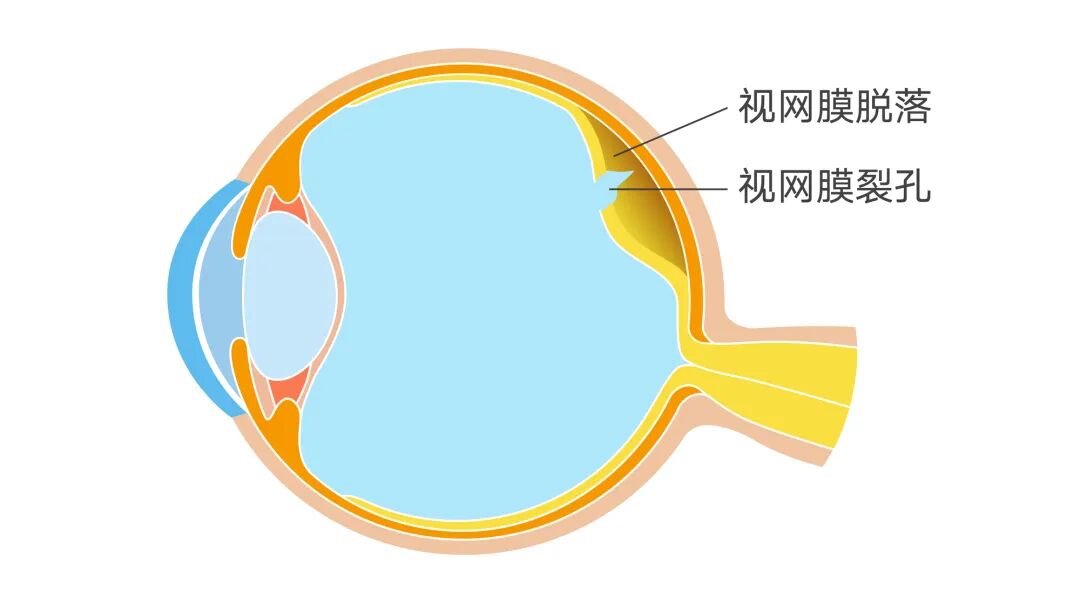
This explains why vitreous haemorrhage occurs in advanced stages of diabetes: the normally clear eyeball suddenly fills with blood, and patients may perceive a red haze or swarms of mosquitoes flying before their eyes. If the bleeding does not stop, or if these defective blood vessels scar and pull on the retina, this can lead to retinal detachment and, ultimately, permanent blindness.
So how can we save this ‘motorway’?
To avoid this massive traffic jam, the key is not to manage the situation at the scene, but to stop the ‘acid rain’ at its source.
Strictly control blood glucose levels: Turn off the acid rain valve
This is the most fundamental step. When glycated haemoglobin (HbA1c) is maintained below 7 per cent over the long term, the corrosive rate of this acid rain is reduced by 76 per cent. Remember: do not wait until the road is ruined to repair it; prevent the rain from falling in the first place.
Regular ‘road condition inspections’: fundus examinations
Deteriorating vision is often a sign of the ‘major traffic jam’ reaching an advanced stage. Five years after the onset of type 1 diabetes, or upon diagnosis of type 2 diabetes, a high-resolution ‘road condition photograph’ (fundus photography or OCT scan) should be taken immediately. Early minor potholes (microaneurysms) can be repaired using laser treatment.
Once macular oedema or new blood vessels appear, the doctor will inject anti-VEGF medication into the eye. This is equivalent to sending a command to the brain: ‘Stop building shoddy roads!’ This can effectively curb the rampant growth of those substandard, temporary blood vessels.

咨询电话:
0769-22660023
医院地址:
东莞市东城区莞樟路石井路段171号-东莞爱尔眼科医院